The attic is the part of a Boise home that most homeowners think about least, and it affects energy performance and comfort most. During the summer, an inadequately insulated attic allows solar heat to radiate down through the ceiling into the living spaces below, forcing the air conditioner to run longer and harder than it should. During the Boise winter, an attic with insufficient insulation or incomplete air sealing allows the conditioned heat from the living spaces below to escape upward and out through the roof, running up the heating bill while the thermostat struggles to keep up. The period before cold weather arrives is the right time to evaluate the attic because it is when the assessment can be done without urgency, when scheduling a professional installation is straightforward, and when an improvement installed in September or October delivers its full value through the entire heating season that follows. HD Drywall & Spray Foam Insulation helps Boise homeowners identify and correct attic insulation deficiencies before cold weather makes them expensive, and this guide covers what to look for and what to prioritize.
Why the Attic Matters More Than Any Other Insulation Location
Heat rises, and in a home with inadequate attic insulation, it rises straight out of the house. The ceiling plane between the conditioned living space and the unconditioned attic is where the largest temperature difference in the home typically exists during both the heating and cooling seasons, and that large temperature difference drives significant heat transfer through every weak point in the ceiling assembly.
In a Boise summer, attic temperatures can reach extreme levels as the roof absorbs solar radiation and the attic air heats accordingly. The ceiling below becomes a radiant heat source that warms the rooms below it, and the air conditioner compensates by running longer cycles that consume more energy. In a Boise winter, the attic stays close to outdoor temperatures, and the warm conditioned air below conducts and convects upward through every gap, inadequate insulation section, and unsealed penetration in the ceiling plane.
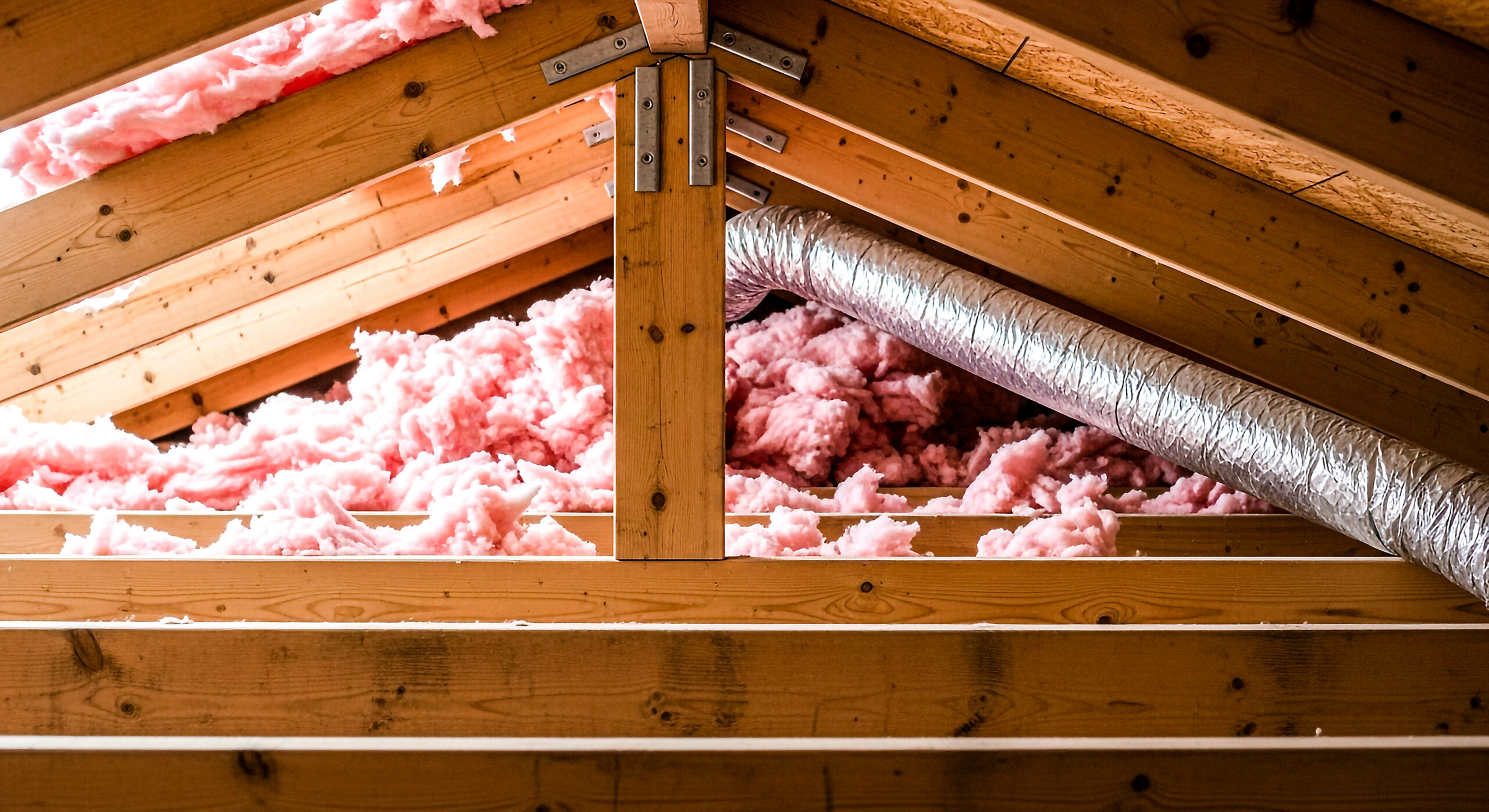
The attic is also where the ductwork for most Boise homes runs, and ductwork in an unconditioned attic loses a significant portion of the conditioned air it is carrying to the temperature differential between the duct interior and the surrounding attic air. Improving attic insulation and air sealing improves the performance of the duct system at the same time by reducing the temperature extremes that the ducts are operating within. Spray foam services for Idaho homes explains how spray foam applied to the attic roof deck creates a conditioned attic that keeps ductwork inside the thermal envelope and eliminates duct loss as a factor in the home’s energy performance.
The Three Attic Insulation Checks Every Boise Homeowner Should Make Before Fall
A practical pre-fall attic evaluation focuses on three areas that most directly affect winter heating performance in Boise homes and that are the most common sources of insulation deficiency in the existing housing stock.
The first check is the current insulation depth and condition. Safely accessing the attic hatch and looking across the attic floor insulation provides a basic indication of current insulation depth and condition. Fiberglass batt insulation that is compressed, wet, or discolored from moisture contact has lost a portion of its R-value. Blown cellulose or fiberglass insulation that has settled to a depth significantly below the top of the ceiling joists is providing less R-value than its original installation depth. The current depth compared to the joist height provides a rough indication of how much insulation is present, and comparing that to the R-38 to R-60 range that current energy codes and energy efficiency recommendations specify for attic floors in the Boise climate zone gives a baseline sense of whether the attic insulation meets current standards.
The second check is the air sealing condition at the ceiling plane below the insulation. This check is more difficult to perform visually because the air sealing deficiencies are at the interface between the ceiling and the attic floor, beneath the insulation. Looking for insulation that is discolored or dirty in specific areas indicates air movement through those locations, because the air carries dust and particles that deposit on the insulation surface as the air passes through it. Dark streaks or discolored patches in the insulation above ceiling penetrations, electrical boxes, and wall top plates are indicators of air leakage that is bypassing the insulation rather than conducting through it. Open-cell spray foam insulation details how spray foam seals these air leakage pathways at the ceiling plane while also providing additional insulation value above the sealed penetrations.
The third check is the condition and insulation of the attic hatch itself. The attic hatch is a direct opening through the ceiling plane, and in most Boise homes it is the least insulated and least air-sealed component of the entire ceiling assembly. An attic hatch that is a simple piece of drywall sitting in a frame with no weatherstripping and no insulation on its attic-facing surface is an attic hatch that allows significant heat loss through both conduction and air leakage around its perimeter every time cold air in the attic presses down on it or warm air from below rises against it. Adding insulation to the attic face of the hatch and weatherstripping to its perimeter is one of the highest-return-per-dollar improvements available in a Boise attic.
R-Value Requirements for Boise Attics: Understanding What You Need
R-value is the thermal resistance rating that measures how effectively an insulation material slows conductive heat transfer. Higher R-value means more resistance, and the current recommendations for attic insulation in the Boise climate zone reflect the heating demands of Idaho winters.
The International Energy Conservation Code as adopted by Idaho specifies minimum attic insulation R-values for new construction that reflect the heating degree days and climate conditions of the region. For most of the Boise area, which falls in climate zone 5 under the IECC classification, current code minimums for attic insulation in new construction are in the range of R-38 to R-49. Homes built before current code requirements were adopted frequently have significantly less attic insulation than these current minimums, and improving to current or better insulation levels produces meaningful energy performance improvement in these older homes.
The R-value of existing attic insulation is not always easy to determine without professional assessment, but the relationship between insulation depth and R-value provides a rough guide. Blown fiberglass insulation achieves approximately R-2.5 per inch, meaning that 15 inches of blown fiberglass achieves approximately R-38. Blown cellulose achieves approximately R-3.7 per inch, meaning that approximately 10 inches of cellulose achieves approximately R-38. If the current attic insulation depth is significantly below these target depths, the attic is likely underinsulated relative to current standards.
For Boise homeowners who want to achieve the highest level of attic thermal performance, the conditioned attic approach using spray foam applied to the underside of the roof deck rather than the attic floor achieves higher effective R-values by eliminating the thermal bridging through the roof framing members and by bringing the duct system inside the conditioned envelope. Closed-cell spray foam insulation examines the performance characteristics of closed-cell foam in roof deck applications where high R-value per inch is the primary performance requirement.
Air Sealing: The Step That Makes Insulation Work as Designed
Adding insulation to an attic without addressing the air sealing at the ceiling plane below it is an improvement that delivers less than its potential because the air that bypasses the insulation through unsealed penetrations carries heat far more efficiently than conduction through the solid insulation material.
The most significant air sealing locations in a typical Boise attic are the top plates of interior walls where they meet the ceiling, the areas around recessed light fixtures, the penetrations for electrical wiring and plumbing that pass through the ceiling, the attic hatch perimeter, and the transitions between the insulated ceiling plane and any knee walls or other geometry changes in the attic.
Top plate air sealing is the highest-volume air leakage location in most Boise attics because the top plates of interior walls create a continuous pathway between the wall cavities below and the attic space above, and wall cavities are connected to every penetration and gap in the building envelope below. Sealing the top plates of interior walls with spray foam or caulk before adding attic insulation addresses the source of a significant portion of the air infiltration that affects the conditioned living space below.
Recessed light fixtures are the most concentrated air leakage source in attics of Boise homes built between the 1980s and the 2000s, when recessed lighting became common in residential construction. Standard recessed fixtures from this era are not rated for insulation contact and create a significant opening between the conditioned space and the attic at every fixture location. Installing airtight covers over recessed fixtures from the attic side before adding insulation is the standard remediation approach for this common air leakage source.
When to Consider Spray Foam vs. Blown Insulation for a Boise Attic
The choice between spray foam and blown insulation for a Boise attic improvement depends on the specific performance goals, the current attic condition, and the role of the attic in the home’s overall thermal and mechanical system.
Blown insulation added to an existing attic floor is the right choice when the primary goal is increasing the R-value of the attic floor insulation, when the air sealing at the ceiling plane has been adequately addressed, and when the ductwork in the attic is not a significant energy performance concern. Blown insulation is less expensive per R-value achieved than spray foam and can be installed quickly over existing insulation to bring the total depth to the target level.
Spray foam on the attic floor is the right choice when comprehensive air sealing alongside insulation improvement is the goal, because spray foam seals the penetrations it contacts as it provides insulation rather than requiring separate air sealing work before the insulation is added. A Boise home with extensive recessed lighting, complex ceiling geometry, or a history of air leakage symptoms such as drafts and condensation issues benefits from the combined air sealing and insulation approach that spray foam provides.
Spray foam on the roof deck rather than the attic floor is the right choice when the goal is creating a conditioned attic that brings the duct system inside the thermal envelope, when the attic space is used for mechanical equipment or storage that benefits from conditioned temperatures, or when the attic geometry makes floor insulation impractical. This approach is more expensive than attic floor insulation but produces the highest level of attic thermal performance and eliminates duct loss as an energy performance factor. Crawl space spray foam insulation provides useful context on how spray foam creates conditioned below-grade spaces with the same principle applied to a different building location.
The Pre-Fall Timing Advantage for Boise Homeowners
The period from late August through October is the optimal window for attic insulation improvements in Boise for reasons that affect both the quality of the installation and the practical scheduling experience.
Attic temperatures in a Boise summer peak in July and August at levels that make extended attic work uncomfortable and potentially unsafe for the installation crew. September and October bring cooler attic temperatures that make the installation environment significantly more manageable, which allows the installation crew to work more carefully and thoroughly than extreme heat conditions permit.
Contractor scheduling in the post-summer period is typically more available than during the peak summer season when demand for insulation and spray foam work is highest. A homeowner who waits until the first cold spell to call about attic insulation improvement is a homeowner who may be scheduling work for November or December rather than September or October, missing a portion of the heating season where the improvement would have delivered value.
The improvement installed in September or October is delivering its full energy performance benefit from the first cold night of the Boise fall season through the end of winter, which represents the full heating season value of the investment. An improvement installed in December delivers partial season value in the first year, with the full annual value only appearing in subsequent years. Residential spray foam insulation services from HD Drywall & Spray Foam Insulation support Boise homeowners who want to schedule their attic improvement during the optimal pre-fall window.
Frequently Asked Questions About Attic Insulation in Boise
How do I know if my Boise attic has enough insulation?
The most reliable assessment is a professional evaluation that measures current insulation depth, assesses the condition of existing insulation, and identifies air sealing deficiencies at the ceiling plane. A rough self-assessment can be done by measuring the depth of existing insulation and comparing it to the R-38 to R-49 range that current energy performance recommendations specify for the Boise climate zone, understanding that depth-to-R-value conversion depends on the type of insulation present.
Can I add insulation on top of existing attic insulation in my Boise home?
Yes in most cases. Blown insulation can be added on top of existing blown or batt insulation to increase the total depth without removing the existing material. The condition of the existing insulation matters, however. Wet, moldy, or heavily compressed existing insulation should be removed and replaced rather than covered with additional material. A professional assessment of the existing insulation condition determines whether adding on top is appropriate for a specific Boise attic.
How much does attic insulation improvement cost in Boise?
Attic insulation improvement costs in Boise vary based on the current insulation condition, the square footage of the attic, the type of insulation being added, and whether air sealing work is included alongside the insulation improvement. A professional assessment of the specific attic produces an accurate cost estimate for the scope of work appropriate for that home.
Will improving my attic insulation reduce my Boise heating bills?
Yes, in most cases. The magnitude of the reduction depends on the current insulation condition, the specific improvement made, and the home’s overall energy performance. Homes with significantly underinsulated attics that are being brought to current energy performance standards typically see the most dramatic heating bill reductions. Homes that are already reasonably well insulated see smaller percentage improvements from additional attic insulation.
Does attic insulation improvement require permits in Boise?
Adding insulation to an existing attic typically does not require a building permit in Boise and the surrounding Treasure Valley communities. Work that involves changes to the building structure, the roof assembly, or other regulated components may require permits. A professional contractor familiar with local requirements can confirm what is applicable for a specific project scope.
How do I get a pre-fall attic insulation assessment for my Boise home?
Contact HD Drywall & Spray Foam Insulation to schedule a pre-fall attic assessment. The team evaluates your current insulation depth and condition, identifies air sealing opportunities at the ceiling plane, and recommends the improvement approach that delivers the best energy performance for your specific Boise home before cold weather arrives.
The Best Time to Improve Your Attic Insulation Is Before You Need It
The Boise homeowner who improves their attic insulation in September is comfortable in October and saving on heating bills in November. The homeowner who waits until January to address an attic that has been underperforming for years is comfortable in March and has paid for the delay in higher utility bills throughout the coldest months of the year. HD Drywall & Spray Foam Insulation helps Boise homeowners get ahead of the heating season with attic insulation improvements that deliver their full value from the first cold night of fall. Visit our About Us page to learn more about our team or contact us to schedule your pre-fall attic assessment today.