
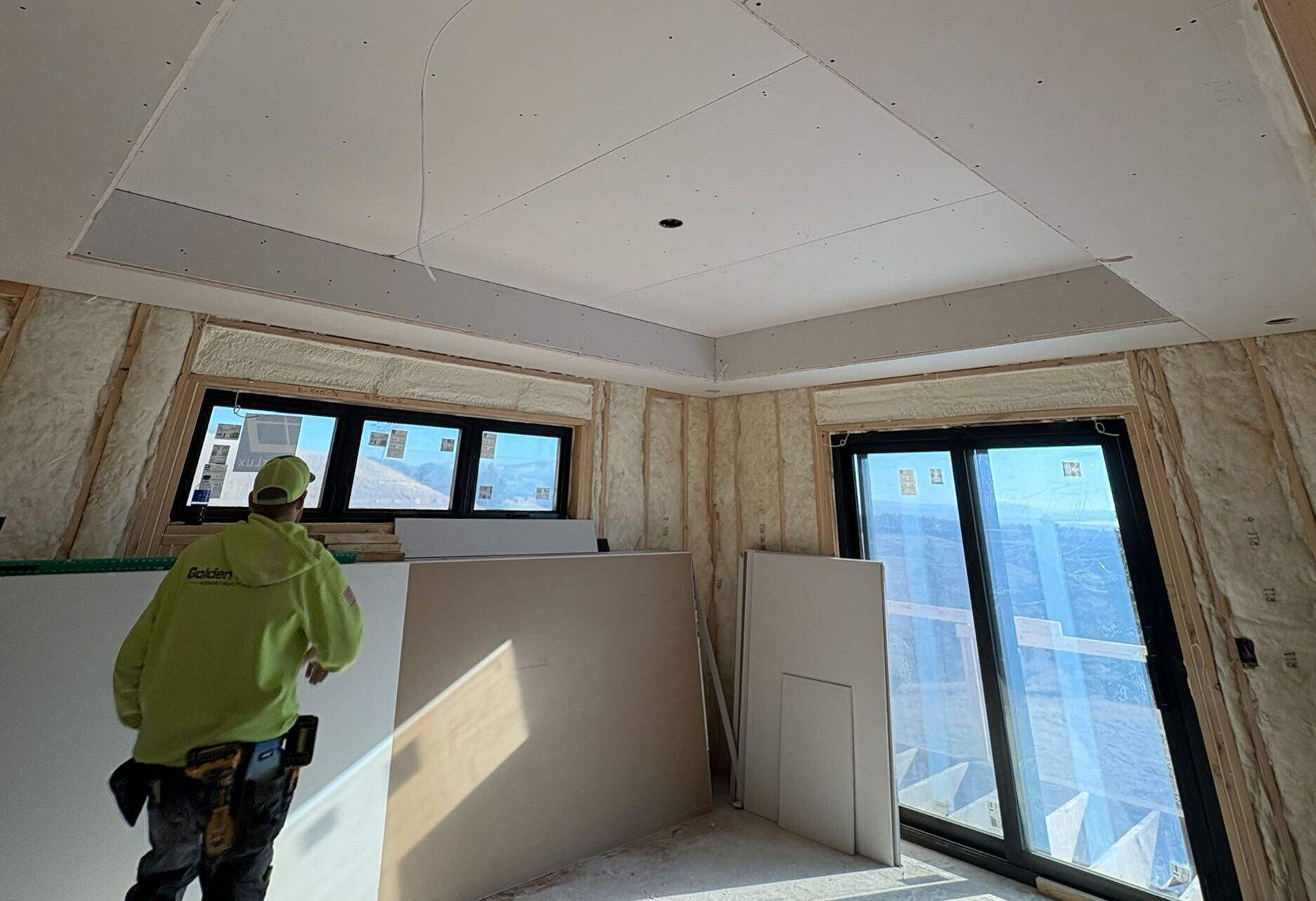
Drywall is one of the most important components of modern homes and commercial buildings. It creates smooth walls and ceilings, provides a finished appearance, and serves as the foundation for paint, trim, and interior finishes.
Whether you’re building a new home, finishing a basement, remodeling a room, or repairing damaged areas, understanding the drywall installation process can help you prepare for your project and know what to expect.
In this guide, we’ll walk through the drywall installation process from start to finish and explain why professional installation makes a significant difference in the final result.
What Is Drywall?
Drywall, sometimes called sheetrock or gypsum board, consists of a gypsum core sandwiched between layers of paper facing.
It is widely used because it is:
- Cost-effective
- Durable
- Fire-resistant
- Easy to finish
- Suitable for walls and ceilings
When installed correctly, drywall provides a smooth and attractive interior surface that can last for decades.
Step 1: Project Planning and Measurement
Every successful drywall project begins with proper planning.
Before installation starts, contractors evaluate:
- Room dimensions
- Ceiling heights
- Wall layouts
- Electrical locations
- Plumbing penetrations
- HVAC openings
Accurate measurements help ensure materials are ordered correctly and waste is minimized.
Professional planning also helps identify potential challenges before installation begins.
Step 2: Preparing the Framing
Drywall is installed over wall studs and ceiling framing.
Before drywall can be hung, contractors inspect the framing to ensure:
- Studs are straight
- Framing is secure
- Electrical work is complete
- Plumbing installations are finished
- Insulation has been installed where required
Any framing issues should be corrected before drywall installation begins.
Step 3: Hanging Drywall Panels
Once preparation is complete, drywall sheets are carefully positioned and secured.
Contractors cut drywall to fit around:
- Doors
- Windows
- Outlets
- Light fixtures
- Plumbing components
- HVAC vents
Proper panel placement helps reduce seams and improves the final appearance.
Professional installers use specialized tools to ensure precise cuts and secure fastening.
Step 4: Fastening the Drywall
Drywall panels are attached using screws specifically designed for drywall applications.
Proper screw placement is critical because:
- It prevents loose panels
- Reduces cracking
- Improves durability
- Creates a stronger finished surface
Experienced drywall contractors follow specific fastening patterns to achieve the best results.
Step 5: Taping the Joints
After drywall panels are installed, visible seams must be reinforced.
Drywall tape is applied over:
- Panel joints
- Inside corners
- Outside corners
- Repair areas
The tape helps prevent future cracking while creating a smooth transition between panels.
This stage is one of the most important parts of the entire drywall installation process.
Step 6: Applying Joint Compound
Joint compound, often called “mud,” is applied over taped seams and fasteners.
The goal is to create a seamless appearance that hides all panel joints.
Most projects require multiple coats of compound.
Each coat is:
- Applied carefully
- Allowed to dry
- Sanded smooth
- Reapplied as needed
Professional drywall finishing requires patience and attention to detail.
Step 7: Sanding and Surface Preparation
Once the final coat of joint compound dries, the drywall is sanded to create a smooth surface.
Proper sanding helps eliminate:
- Uneven areas
- Tool marks
- Visible seams
- Surface imperfections
This step significantly impacts the quality of the finished walls and ceilings.
Experienced drywall finishers know how to achieve smooth surfaces while minimizing dust and imperfections.
Step 8: Priming and Painting
After sanding is complete, the drywall is ready for finishing.
Most projects include:
- Primer application
- Interior painting
- Texture application (if desired)
Primer helps seal the drywall and creates an even surface for paint.
Once painted, the walls and ceilings achieve their final appearance.
Why Professional Drywall Installation Matters
While drywall may appear simple, achieving a professional finish requires skill and experience. Trust our professional drywall services.
Professional drywall contractors understand:
- Proper panel layout
- Joint placement
- Fastening techniques
- Finishing methods
- Surface preparation
The quality of installation directly affects the appearance and durability of the finished project.
Common Drywall Installation Mistakes
Even small errors can later require professional drywall repair. DIY drywall projects often encounter issues such as:
Visible Seams
Improper taping and finishing can make joints visible after painting.
Uneven Surfaces
Poor sanding techniques may create noticeable imperfections.
Cracking
Incorrect fastening or framing movement can lead to future cracks.
Corner Damage
Improper corner finishing often results in weak or uneven edges.
Professional installation helps avoid these common problems.
Residential Drywall Installation Services
Residential drywall installation is commonly used for:
- New home construction
- Basement finishing
- Home additions
- Room renovations
- Garage conversions
- Ceiling replacements
Each project requires careful planning and professional execution.
Commercial Drywall Installation
Commercial drywall installation projects often involve:
- Offices
- Retail spaces
- Warehouses
- Medical facilities
- Restaurants
- Multi-unit properties
Professional contractors ensure projects meet building requirements while maintaining quality standards.
Choosing the Right Drywall Contractor
Before hiring a drywall contractor, homeowners should ask:
- Are you licensed and insured?
- How much drywall experience do you have?
- Do you provide free estimates?
- Can you provide project references?
- What is your expected timeline?
Selecting an experienced contractor helps ensure a smooth project and quality results.
Contact HD Drywall & Spray Foam Insulation
At HD Drywall & Spray Foam Insulation, we provide professional drywall installation services for residential and commercial projects.
From new construction homes and renovations to basement finishing and repairs, our experienced team delivers quality workmanship and attention to detail on every project.
Contact us today for a free estimate and learn how professional drywall installation can help bring your project to life.


