
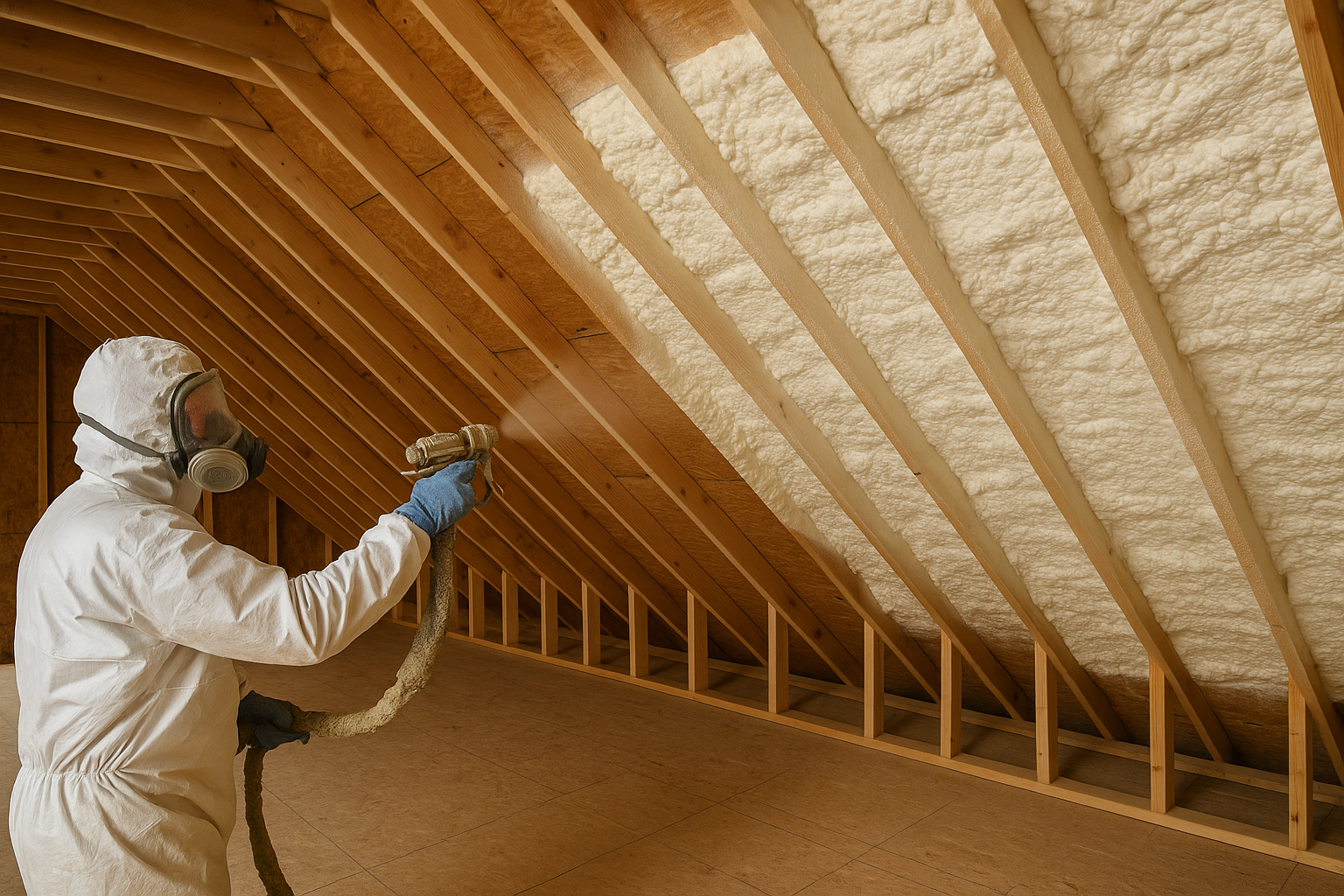
One of the most common questions homeowners ask before upgrading their insulation is, “How much does spray foam insulation cost?”
While spray foam insulation typically requires a larger upfront investment than traditional insulation materials, many homeowners find the long-term energy savings and comfort improvements well worth the cost.
The total price of a spray foam insulation project depends on several factors, including the type of foam used, the size of the area being insulated, accessibility, and the specific goals of the project.
In this guide, we’ll break down the factors that affect spray foam insulation costs and explain what homeowners should expect when requesting an estimate.
What Affects Spray Foam Insulation Costs?
Every property is unique, which means insulation pricing can vary significantly.
The most important factors include:
Type of Spray Foam
The two primary insulation options are:
- Open cell spray foam
- Closed cell spray foam
Closed cell foam generally costs more due to its higher density, increased R-value, and moisture resistance.
Size of the Project
Larger homes and larger insulation areas require more material and labor.
Common project areas include:
- Attics
- Crawl spaces
- Exterior walls
- Basements
- Garages
- Pole barns
- New construction homes
Accessibility
Areas that are difficult to access may require additional preparation and installation time.
Examples include:
- Tight crawl spaces
- Complex attic layouts
- Existing wall cavities
- Areas requiring old insulation removal
Existing Conditions
The condition of the property can also affect pricing.
Additional work may be needed if:
- Old insulation must be removed
- Moisture issues are present
- Structural repairs are required
- Ventilation improvements are necessary
Open Cell vs Closed Cell Cost Differences
Open Cell Spray Foam
Open cell spray foam is typically the more affordable option. See our full comparison of open cell vs closed cell spray foam.
Benefits include:
- Excellent air sealing
- Sound reduction
- Lower installation costs
- Good performance for interior applications
Closed Cell Spray Foam
Closed cell foam usually requires a larger investment but offers:
- Higher R-values
- Moisture resistance
- Additional structural strength
- Enhanced energy efficiency
Many homeowners choose closed cell foam for crawl spaces, basements, and exterior applications where durability is important.
Why Spray Foam Costs More Than Fiberglass
Homeowners often compare spray foam insulation to traditional fiberglass insulation.
While fiberglass generally has a lower initial cost, spray foam offers several advantages:
Air Sealing
Fiberglass slows heat transfer but does not effectively stop air leakage.
Spray foam creates an air-tight seal that helps reduce energy loss.
Energy Savings
Many homeowners experience lower heating and cooling costs after installing spray foam insulation.
Long-Term Performance
Unlike some traditional insulation products, spray foam maintains its shape and performance for many years.
Moisture Control
Closed cell foam provides additional protection against moisture intrusion in certain applications.
Is Spray Foam Insulation Worth the Cost?
For many homeowners, the answer is yes.
Benefits often include:
- Lower utility bills
- Improved comfort
- Better indoor temperature control
- Reduced drafts
- Improved building efficiency
- Increased home value
When viewed as a long-term investment, spray foam insulation can provide significant value over the life of the home.
Areas That Benefit Most from Spray Foam
Attic Insulation
Attics are one of the largest sources of energy loss in many homes.
Proper spray foam insulation can dramatically improve energy efficiency.
Crawl Spaces
Spray foam helps control moisture and air infiltration in crawl spaces.
Exterior Walls
Wall insulation improves overall thermal performance and comfort.
New Construction Homes
Many builders use spray foam to maximize energy efficiency from the beginning.
How to Get an Accurate Spray Foam Estimate
Because every project is different, the best way to determine actual costs is to schedule a professional inspection.
A qualified insulation contractor can evaluate:
- Building size
- Insulation goals
- Existing conditions
- Moisture concerns
- Ventilation requirements
This allows homeowners to receive an accurate recommendation and estimate based on their specific property.
Questions to Ask Before Hiring an Insulation Contractor
Before selecting an insulation company, consider asking:
- Are you licensed and insured?
- What type of spray foam do you recommend?
- How long have you been installing spray foam?
- Do you offer free estimates?
- What warranties are available?
- Can you provide project references?
Choosing an experienced contractor helps ensure quality results and long-term performance.
Why Professional Installation Matters
Proper installation is critical to maximizing the benefits of spray foam insulation.
Professional installers understand:
- Proper application thickness
- Air sealing techniques
- Building science principles
- Moisture management
- Local building code requirements
A properly installed system delivers better comfort, efficiency, and durability.
Contact HD Drywall & Spray Foam Insulation
At HD Drywall & Spray Foam Insulation, we provide professional spray foam insulation services for homeowners, builders, and businesses.
Whether you’re insulating a new construction home, upgrading an attic, or improving energy efficiency throughout your property, our team can help.
Contact us today to schedule a free estimate and learn more about the right insulation solution for your home.


